
Grundy Jail Release Paths
Grundy County Jail holds people awaiting trial, serving county sentences of up to one year, and serving periodic imprisonment. Leaving the building can have several meanings. A court may authorize community release. A county sentence may end. Staff may also transfer a sentenced person to the Illinois Department of Corrections, return an outside-county detainee to the committing county, or deliver someone under federal or other lawful authority.
The distinction matters in Grundy County. The 2024 IDOC inspection says the jail houses people for Cook County and neighboring counties. A person can therefore leave Grundy County Jail while remaining confined elsewhere. The useful Sheriff record is not merely a statement that the person is gone. It is the received timestamp, discharged or transferred timestamp, release or disposition code, and destination or receiving agency if recorded.
| Recorded event | What it supports | Next source |
|---|---|---|
| Discharged | Grundy physical custody ended | Court order and VINE |
| Transferred to IDOC | County custody ended, state custody began | IDOC offender search |
| Transferred to another county | Physical site changed | Receiving county and its court |
| Federal transfer | Another federal authority may control custody | Federal docket, USMS, or BOP |
Confirm Grundy Jail Release
There is no official Grundy County name-search roster or rolling release list. Start with the last known booking date and arresting agency. The Illinois VINE portal can show a custody change supplied by a participating source. Match more than a name, note the reporting agency, and preserve the exact event wording. A VINE event is useful, but the source custody record is stronger proof.
Then read the Grundy court case. A release order, dismissal, sentence, custody credit, or mittimus explains legal authority. A mittimus is the court document that commits a sentenced person to custody. Court action may precede the jail's physical discharge process, so the docket alone does not establish the moment the person left.
- Identify the person, arresting agency, and approximate booking date.
- Check Illinois VINE for the named facility and event.
- Review the Grundy court disposition and latest operative order.
- Ask the Sheriff for the discharge or transfer row and receiving agency.
- If transferred, continue with the receiving custodian instead of calling it community release.
The full county search and records route is covered on the Grundy County released-inmate search. It helps reconcile jail, court, state, and federal records without treating one system as universal.
Grundy Jail Records Request
The Sheriff supplies existing records through its FOIA process. A focused request should give the full name, date of birth if known, and the approximate booking period. Ask for the booking or custody number, received date and time, discharged or transferred date and time, disposition code or reason, release authority, and destination or receiving agency if recorded. The office is not required to research the person's present location or create a new explanation.
Email the request in the message body to foia@sheriff1.com. Mail or hand delivery goes to the Grundy County Sheriff's Office, Attn: FOIA Officer, 111 E. Illinois Avenue, Morris, IL 60450. Fax delivery is available at 815-941-3463. The Records Division can be reached at 815-941-3240, Monday through Friday, 8:00 a.m. to 4:00 p.m.
111 E. Washington Street
Morris, IL 60450
815-941-3243
Sheriff Records Division
111 E. Illinois Avenue
Morris, IL 60450
815-941-3240
Monday-Friday, 8:00 a.m.-4:00 p.m.
For an ordinary noncommercial request, Illinois FOIA generally allows five business days for compliance or denial and a possible statutory five-business-day extension. The first 50 black-and-white letter or legal pages are free, with later pages capped at 15 cents each. Ask for electronic delivery when practical. Exemptions, sealing, expungement, privacy, active-investigation limits, and court orders may affect what is released.
Grundy Jail Record Fields
Illinois law expressly includes the time and date a person was received into, discharged from, or transferred from an arresting agency's custody within chronologically maintained arrest information. That makes the transfer field essential. The statute does not require Grundy County to operate an indefinite online roster, and the county has no published web-retention window.
- Discharge timestamp
- When Grundy County Jail physically stopped holding the person.
- Transfer timestamp
- When custody moved from Grundy to another agency or facility.
- Disposition code
- The source agency's label for how the booking ended.
- Release authority
- The order or legal basis staff used to complete the event.
- Receiving agency
- The next custodian, when a transfer destination was recorded.
Keep the original label before translating it into plain language. “Transferred” must not become “released” without a separate community-release record. Likewise, a court order may show why release should occur while the custody log shows when staff completed it.
Grundy Jail Transfer History
The jail was constructed in 1975 and renovated in 2001. IDOC's April 10, 2024 inspection listed a rated capacity of 63 and recorded 21 people present that day. The county jail page separately describes a capacity of 65. Those figures use different sources or definitions and should remain separately labeled. The inspection found no noncompliances.
The contract-housing note is more important to release research than the snapshot count. When Cook County or a neighboring county is the committing authority, obtain both Grundy's physical-departure record and the other county's receipt or continued-custody record. VINE can also be checked under both agencies. Until a community event is supported, the precise description is that the person transferred from Grundy custody.
Grundy Jail Transfer Property
The official jail information page gives specific instructions for a person transferring to IDOC. The person completes a property-release form, and family must collect the property within 30 days. Items left longer are disposed. This procedure is further evidence that an IDOC move is a transfer, not a community discharge.
Remaining commissary funds are returned by check or debit card during the stated weekday window of 8:00 a.m. to 4:00 p.m. Mail arriving after release or transfer is returned to the postal service rather than forwarded. These details help manage the effects of departure, but none confirms a person's current custody status.
The official jail page shown below is a source for transfer and property guidance.
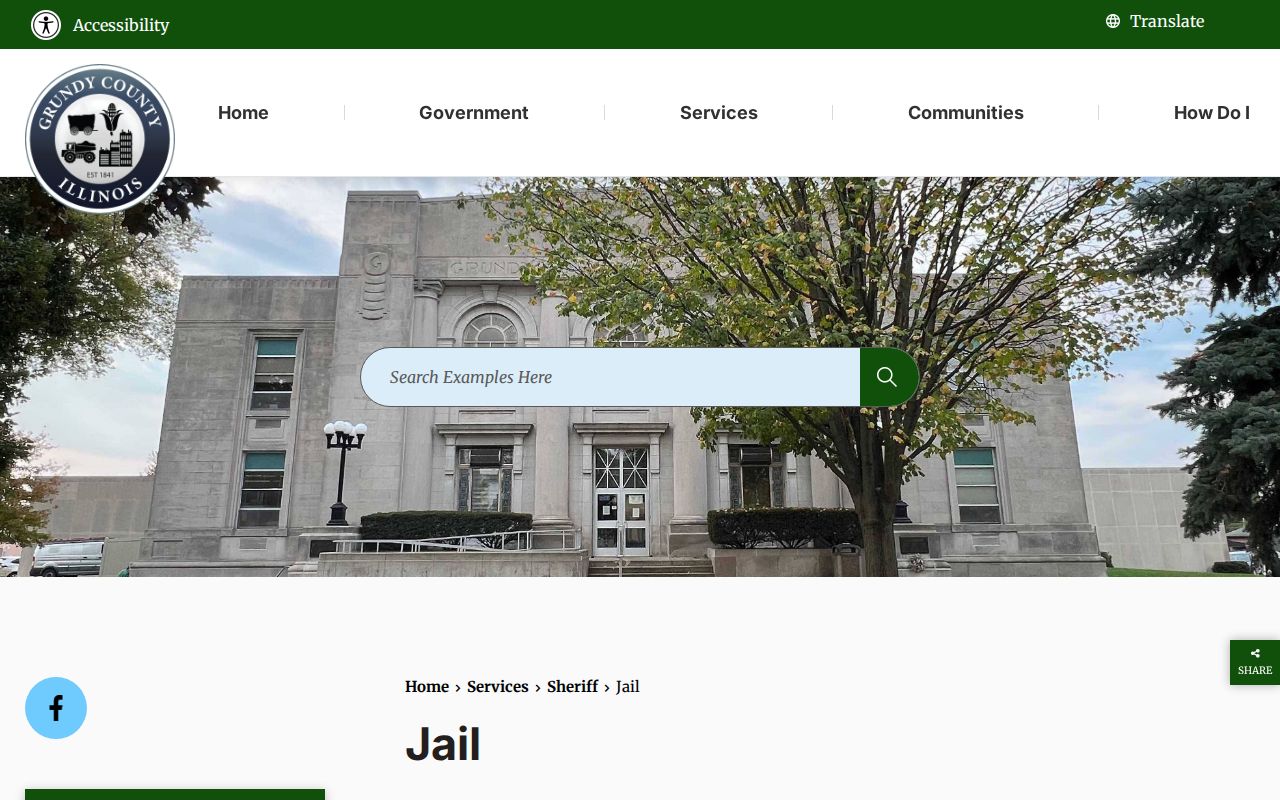
Its information should be read with the court record and Sheriff custody log when the destination matters.
Grundy Jail Release Limits
No official source established a standard release hour, exit door, family waiting area, weekend schedule, or jail shuttle. Call the jail for current logistical instructions. Grundy Transit is a general demand-response service, not a documented jail-release program, so it should not be treated as a guaranteed pickup.
A person sentenced to IDOC may transfer at any time after sentencing. Allow for intake processing before assuming an immediate IDOC no-match reverses the Sheriff transfer record. Search by surname variants, birthdate, and IDOC number when known. A later IDOC profile can establish state admission, while its Last Paroled Date may eventually support actual prison release to supervision.
Important: Grundy County Jail departure proves only that Grundy stopped holding the person. Always identify whether the record says discharged or transferred.
Public Record Search
Sponsored Results